


Culverts, Ditches & Drainage: How Northeast Ohio Properties Manage Heavy Rain

Culverts, Ditches & Drainage: How Northeast Ohio Properties Manage Heavy Rain
Heavy rain can reveal drainage problems that aren't always noticeable during dry weather.
Water may begin pooling beside a driveway. A roadside ditch may overflow or stop draining. Soil can wash away around a culvert. Low areas of the yard may stay saturated for days after the rain ends.
These problems can look unrelated, but they often come back to the same issue: water isn't moving through the property the way it should.
For homeowners and property owners throughout Northeast Ohio, understanding how culverts, roadside ditches, grading, and property drainage work together can make it easier to recognize a developing problem before it causes more significant erosion or property damage.
SB Construction provides drainage, excavation, grading, culvert, and site preparation services throughout Medina County and surrounding Northeast Ohio communities.
Here's what to watch for when the rain starts coming down.
1. Start by Watching Where the Water Goes
One of the easiest ways to understand your property's drainage is to observe it during or shortly after a heavy rain.
Look for areas where water:
Pools instead of continuing to move
Flows across a driveway
Collects beside a culvert
Overflows a roadside ditch
Creates channels through soil or landscaping
Washes gravel or soil away
Remains long after the rain stops
The location of the water can provide clues about what may be happening elsewhere on the property.
A wet spot isn't always the source of the problem. Water may be traveling from another area before eventually collecting at the lowest point.
That's why effective drainage work begins by understanding the entire path the water is taking.
2. What Does a Culvert Actually Do?
A culvert allows water to continue through an existing drainage path when something such as a driveway or property entrance crosses over it.
Instead of allowing water to flow across the driveway, the culvert carries it underneath.
When everything is working properly, water enters one side of the culvert, moves through the pipe, and continues into the drainage area on the other side.
Problems can develop when a culvert becomes:
Clogged with sediment or debris
Crushed or damaged
Deteriorated
Surrounded by erosion
Obstructed at the inlet or outlet
Affected by changing grades or drainage conditions
When water can't move through the pipe effectively, it has to go somewhere else.
That can lead to standing water, erosion, or water flowing across areas it normally wouldn't.

3. Signs Your Driveway Culvert May Need Attention
A culvert doesn't necessarily have to completely collapse before it begins creating problems.
Watch for warning signs such as:
Water Backing Up on One Side
If one side of the driveway consistently fills with water during heavy rain, the culvert may not be moving water effectively.
Water Flowing Across the Driveway
Water traveling over a driveway rather than underneath it can indicate a problem with the culvert or surrounding drainage path.
Washed-Out Driveway Edges
Repeated erosion around the driveway can be a sign that water isn't following its intended route.
Soil Washing Away Around the Pipe
Erosion near the inlet or outlet may indicate that water is becoming concentrated around the culvert.
A Visibly Damaged Pipe
Crushing, deterioration, or other physical damage can restrict flow and eventually require replacement.
When culvert replacement is needed, the surrounding ditch, grading, excavation, and drainage conditions should also be considered.
4. Roadside Ditches Are Part of the Same System
A culvert can't work properly if the ditch feeding it doesn't work properly.
Roadside ditches help collect and direct stormwater along an established drainage route.
Over time, however, ditches can change.
Sediment may accumulate. Soil can erode. Vegetation may interfere with flow. Low areas can develop. Culverts may become obstructed.
Signs of a roadside ditch problem can include:
Standing water
Frequent overflow
Eroded banks
Sediment buildup
Water crossing driveways
Water leaving the intended ditch
Culvert backups
If the ditch can't deliver water to the culvert—or can't carry it away after it exits—the entire drainage system may struggle.
5. Can You Enclose a Roadside Ditch?
For some properties, an open roadside ditch can take up significant space and create an area that's difficult to mow or maintain.
This may lead property owners to consider a roadside ditch enclosure.
A ditch enclosure generally involves creating an underground path for the drainage water using pipe, followed by the appropriate backfill, compaction, and grading above it.
But an open ditch shouldn't simply be filled with soil.
The water still needs somewhere to go.
A properly planned project needs to consider:
Existing water flow
Ditch elevation
Drainage pipe placement
Existing culverts
Inlets and outlets
Excavation
Backfill
Compaction
Final grading
Surrounding properties and drainage paths
Depending on where the ditch is located and who controls the roadway or drainage area, local or roadway approvals may also apply.
6. Grading Can Make a Big Difference
Sometimes the pipe isn't the primary problem.
The property itself may be directing water toward an area where it can't drain efficiently.
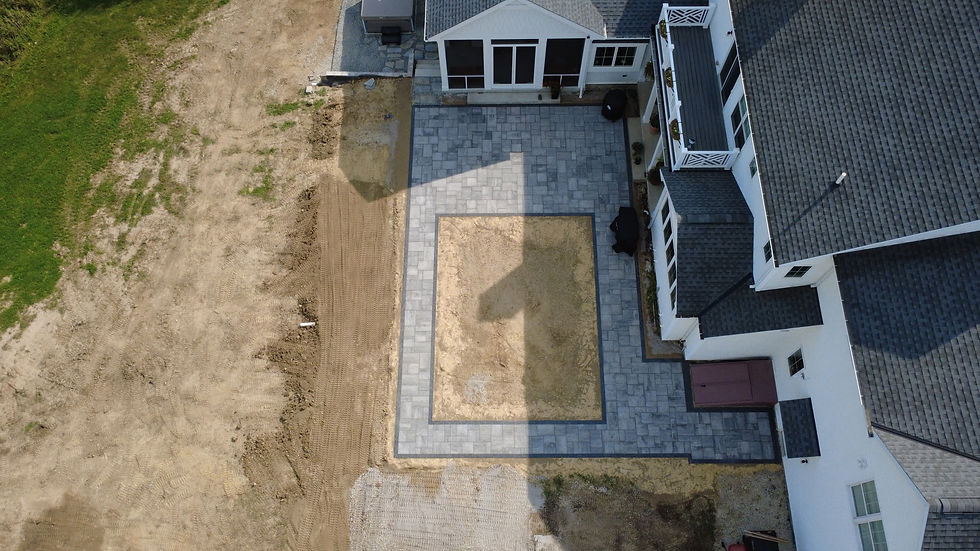
That's where grading becomes important.
The slope and elevation of the ground determine where surface water naturally travels.
Grading may help:
Redirect runoff
Correct low areas
Improve ditch flow
Reduce standing water
Improve conditions around culverts
Prepare for other drainage improvements
Even relatively small elevation changes can influence where large amounts of stormwater travel during a heavy rain.
7. Why Does My Property Keep Eroding?
Water follows the easiest path available.
When runoff becomes concentrated in one location, it can gradually carry soil away with it.
You may begin noticing:
Channels forming through the yard
Soil disappearing around a culvert
Gravel washing out of a driveway
Ditch banks deteriorating
Exposed roots
Landscaping repeatedly washing away
Adding more soil or gravel may temporarily improve the appearance, but if the water continues following the same path, the erosion may return.
The more important question is:
Why is so much water moving through this particular area?
Identifying that answer can help determine whether grading, culvert work, ditch improvements, or another drainage solution may be appropriate.

8. Drainage Problems Should Be Solved as a System
One of the biggest mistakes with drainage problems is focusing only on the place where water is visible.
For example:
A driveway keeps washing out.
The obvious solution may seem like adding more gravel.
But if a damaged culvert is causing water to cross the driveway, replacing gravel doesn't address the cause.
Likewise, replacing a culvert may not completely solve the problem if the roadside ditch can't move water toward or away from it.
A complete drainage evaluation may consider:
Water Source → Property Grade → Ditch → Culvert → Outlet → Final Drainage Path
Understanding how these pieces interact can lead to a more effective solution.
9. Don't Wait Until the Next Major Storm
Drainage problems tend to become most noticeable during periods of heavy rain—but that's often when they're hardest to address.
If you've already noticed:
Standing water
Driveway erosion
A failing culvert
A ditch that doesn't drain
Recurring washouts
Soil erosion
Saturated areas
it's worth having the property evaluated before another significant rain event makes the problem worse.
Photos and videos taken during heavy rain can also be useful because they show exactly how water behaves when the drainage system is under the most pressure.
Culvert & Drainage Services Throughout Medina County
SB Construction provides professional drainage and site-work services throughout Medina County and Northeast Ohio, including:
Wadsworth
Valley City
Medina
Brunswick
Hinckley
Surrounding Northeast Ohio communities
Our services include culvert pipe installation and replacement, roadside ditch enclosures, drainage improvements, grading, excavation, erosion correction, and site preparation.
With more than 20 years of experience, our family-owned team evaluates the complete site to determine what's contributing to the problem and what type of work may be appropriate.
Need Help With a Culvert, Ditch or Drainage Problem?
If heavy rain leaves your property with standing water, erosion, driveway washouts, overflowing ditches, or culvert problems, SB Construction can help evaluate what's happening.
We provide professional culvert, ditch, grading, excavation, and drainage services throughout Medina County and Northeast Ohio.


Comments